

White flakes scattered across dark furniture or kitchen counters can quickly become frustrating for cat owners. Learning the right cat dandruff treatment methods made a huge difference after noticing how dry skin, shedding, and itching affected both the cat and the cleanliness of the home. Thankfully, most cases improve with proper grooming, hydration, nutrition, and a few simple lifestyle changes that support healthy skin and coat health naturally.
Why Cats Get Dandruff?
Understanding the cause of dandruff is the first step toward choosing the right cat dandruff treatment for long-term relief.
Dry Air And Low Humidity
Indoor heating systems, kitchen ventilation, and dry winter air can remove moisture from a cat’s skin. Cats that spend time near sunny windows, warm appliances, or heated floors may experience flaky skin more often during colder seasons.
Low humidity weakens the skin barrier and causes itching, dryness, and increased shedding. Indoor cats are especially vulnerable because they spend most of their time in climate-controlled environments.
Poor Diet And Nutritional Deficiencies
Cats need healthy fats, quality protein, and essential nutrients to maintain skin hydration. Poor-quality food lacking omega-3 fatty acid can lead to dry skin and visible dandruff along the back and tail.
A dull coat combined with flakes often points toward nutritional imbalance. Cats eating low-moisture diets may also struggle with dehydration, which worsens skin dryness.
Obesity And Limited Grooming

Overweight cats or senior cats with osteoarthritis may have trouble grooming hard-to-reach areas. Dead skin, oil buildup, and loose fur then collect around the lower back and near the tail. Long-haired breeds can develop hidden dandruff because thick fur traps dry skin close to the body.
Cat Dandruff Symptom Matrix
Different symptoms often point toward different causes, making it easier to identify the best treatment approach.
| Symptom | Possible Cause | Severity | Best Solution |
| White flakes on back | Dry skin | Mild | Hydration and grooming |
| Greasy dandruff | Poor grooming | Moderate | Weight management |
| Hair loss with flakes | Infection or mites | High | Veterinary care |
| Red irritated skin | Allergies | Moderate | Allergy treatment |
| Excessive scratching | Fleas or mites | High | Parasite control |
| Dull fur and dryness | Nutritional deficiency | Mild | Omega-3 supplements |
How To Start Cat Dandruff Treatment At Home
Most mild dandruff cases improve significantly with consistent home care and healthy lifestyle adjustments.
Improve Skin Hydration
One of the most effective cat dandruff treatment methods is increasing hydration. Cats naturally drink small amounts of water, especially when eating dry kibble diets. Adding wet food, water-rich treats, or pet fountains encourages better water intake.
Proper hydration supports healthy skin cells and reduces visible flaking. Many cat owners notice improvements within two weeks after increasing moisture in the diet.
Brush Your Cat Regularly
Regular grooming removes dead skin, loose fur, and excess oils trapped in the coat. A slicker brush or metal comb also stimulates natural oil production, helping the coat stay moisturized and shiny.
Daily brushing is especially helpful for long-haired cats and overweight cats that struggle to groom themselves properly. It also reduces flakes around kitchen floors, sofas, and bedding.
Add Omega-3 Fatty Acids
Omega-6 and omega-3 fatty acids improve skin hydration and coat quality naturally. Fish oil supplements or veterinarian-approved skin formulas can reduce inflammation and support healthy fur growth. Consistent supplementation often produces noticeable coat improvements within four to six weeks.
Cat Dandruff Treatment Products That Work
Choosing feline-safe products is essential because human shampoos may worsen irritation and dryness.
Waterless Wipes And Sprays
Waterless cat wipes and dander-reducing sprays gently remove flakes without drying out the skin. Products like Burt’s Bees Dander Reducing Wipes are popular because they use natural ingredients and require no bathing. These options work especially well for cats that dislike water or become stressed during baths.
Oatmeal-Based Cat Shampoos
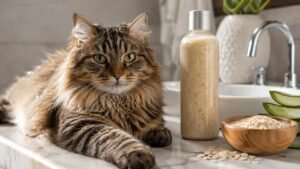
Gentle oatmeal shampoos soothe irritated skin and restore moisture balance. Earthbath Oatmeal & Aloe Shampoo is commonly recommended because it cleans without stripping natural oils. Bathing should remain occasional unless directed by a veterinarian. Overbathing may worsen flaky skin.
Medicated Veterinary Shampoos
Some severe dandruff cases require medicated antifungal or anti-seborrheic shampoos such as Malaseb Shampoo. These products help treat fungal infections, greasy skin, or persistent irritation. Veterinary approval is important before using medicated treatments regularly.
Create A Skin-Friendly Home Environment
Simple environmental changes can dramatically improve cat skin health and reduce dandruff around the home.
Use A Humidifier
Dry indoor air is one of the biggest triggers for cat dandruff during winter. Running a humidifier near common sleeping areas helps restore moisture levels and prevents excessive skin dryness. Homes with open kitchen layouts and central heating systems often benefit the most from added humidity.
Keep Resting Areas Clean
Cat dandruff settles easily on rugs, cushions, kitchen stools, and pet beds. Washing bedding regularly and vacuuming fur-covered surfaces helps reduce airborne dander buildup. Clean spaces also lower the chance of skin irritation caused by dust or allergens.
Encourage Healthy Weight Management
Helping overweight cats maintain a healthy weight improves their ability to groom properly. Better grooming means fewer flakes, healthier oils, and cleaner fur overall. Interactive toys and portion-controlled feeding routines support safe long-term weight management.
Cat Dandruff Treatment Timeline
Most treatments require consistency before visible improvement appears.
| Treatment Method | Average Improvement Time |
| Increased hydration | 1 to 2 weeks |
| Daily brushing | 1 to 3 weeks |
| Humidifier use | 2 to 4 weeks |
| Omega-3 supplements | 4 to 6 weeks |
| Parasite treatment | 1 to 2 weeks |
| Prescription medication | Depends on condition |
When To See A Veterinarian
Some dandruff symptoms indicate more serious health problems that require professional diagnosis.
Persistent Flakes And Hair Loss
Dandruff that lasts more than a month despite proper grooming and hydration may signal allergies, hormonal disorders, or fungal infections. Hair thinning combined with skin redness should always be evaluated by a veterinarian.
Excessive Scratching Or Scabbing

Intense scratching, sores, or crusty skin can point toward flea allergies, mites, or bacterial infections. These conditions usually require prescription treatment. Walking dandruff caused by mites may also spread to other pets in the home.
Lethargy Or Appetite Changes
Flaky skin combined with weight loss, low energy, struggling with sleeping positions or appetite changes may indicate deeper health concerns like diabetes or hyperthyroidism. Veterinary testing becomes essential in these situations.
Natural Remedies For Cat Dandruff Treatment
Natural approaches can safely support long-term skin and coat health when used correctly.
Coconut Oil Support
A small veterinarian-approved amount of coconut oil may help moisturize dry skin naturally. Too much, however, may upset digestion and add unnecessary calories. Moderation is extremely important.
Better Indoor Air Quality
Fresh airflow, natural sunlight, and balanced humidity create a healthier environment for both pets and people. Bright, airy kitchens and living spaces often help reduce dry indoor conditions.
Air purifiers may also help minimize airborne dander.
Stress Reduction Matters
Stress can contribute to excessive grooming and skin irritation. Quiet resting spaces, regular playtime, and stable routines support emotional well-being and healthier skin. Cats thrive in calm environments with predictable habits.
Frequently Asked Questions
1. What Is The Best Cat Dandruff Treatment?
The best cat dandruff treatment includes regular brushing, omega-3 supplements, improved hydration, and maintaining healthy indoor humidity levels.
2. Can Dry Air Cause Cat Dandruff?
Yes. Dry indoor air from heating systems and kitchen ventilation can dry out your cat’s skin and worsen dandruff.
3. Should I Use Human Shampoo On My Cat?
No. Human shampoos can irritate feline skin and make dandruff worse. Always use cat-safe grooming products.
4. When Should I See A Vet For Cat Dandruff?
See a veterinarian if dandruff appears with hair loss, scabbing, severe itching, or changes in appetite and energy.
Goodbye Flakes, Hello Healthy Fur
Finding the right cat dandruff treatment can completely transform your cat’s comfort, coat quality, and overall health. Consistent grooming, better hydration, omega-3 fatty acids, and balanced indoor humidity all work together to reduce flakes naturally.
Paying attention to warning signs and acting early helps prevent more serious skin problems later. A healthy, flake-free cat not only feels happier but also keeps your home cleaner, fresher, and more comfortable every day.