When I brought my puppy home, I expected chewed slippers and late-night potty breaks. What caught me off guard was the nonstop biting. My hands became chew toys. My pant legs turned into moving targets. Every walk across the kitchen looked like an invitation for an ankle attack.
At first, I thought I was doing something wrong. Then I learned something most new dog owners never hear clearly enough: puppy biting is completely normal. Puppies use their mouths to explore, play, communicate, and soothe teething pain. The real goal is not to panic or punish. The goal is to teach bite control calmly and consistently before the behavior becomes a long-term habit.
Once I stopped reacting emotionally and started following a structured training approach, I noticed major improvements within weeks. This guide combines everything that worked for me along with the best modern dog-training practices used by professional trainers across the US.
Why Puppies Bite So Much in the First Place
Most puppies bite because they are overstimulated, teething, playful, tired, or trying to interact with the world around them. Young dogs naturally explore with their mouths the same way toddlers use their hands.
Teething is one of the biggest triggers. Puppies typically begin losing baby teeth around 3 to 4 months old, and the discomfort can make chewing feel soothing. Certain breeds also nip more due to genetics. Herding breeds like Australian Shepherds and Border Collies often chase ankles and moving clothing because that instinct was bred into them for generations.
I also learned that overtired puppies behave very differently from well-rested puppies. The biting became much worse in the evening when my puppy skipped naps or stayed active too long.
Is Puppy Biting Normal or a Sign of Aggression?
This question worried me constantly during the first few weeks.
Normal puppy biting usually happens during excitement or play. The puppy appears loose, bouncy, and energetic. The tail often wags, and the biting comes with playful behavior rather than tension.
Aggressive behavior looks different. A stiff body, intense staring, guarding behavior, snarling, or repeated hard bites without play signals can indicate something more serious.
Most puppies are not aggressive. They are simply untrained and overstimulated. That distinction changed how I approached training completely.
What to Do the Moment a Puppy Bites
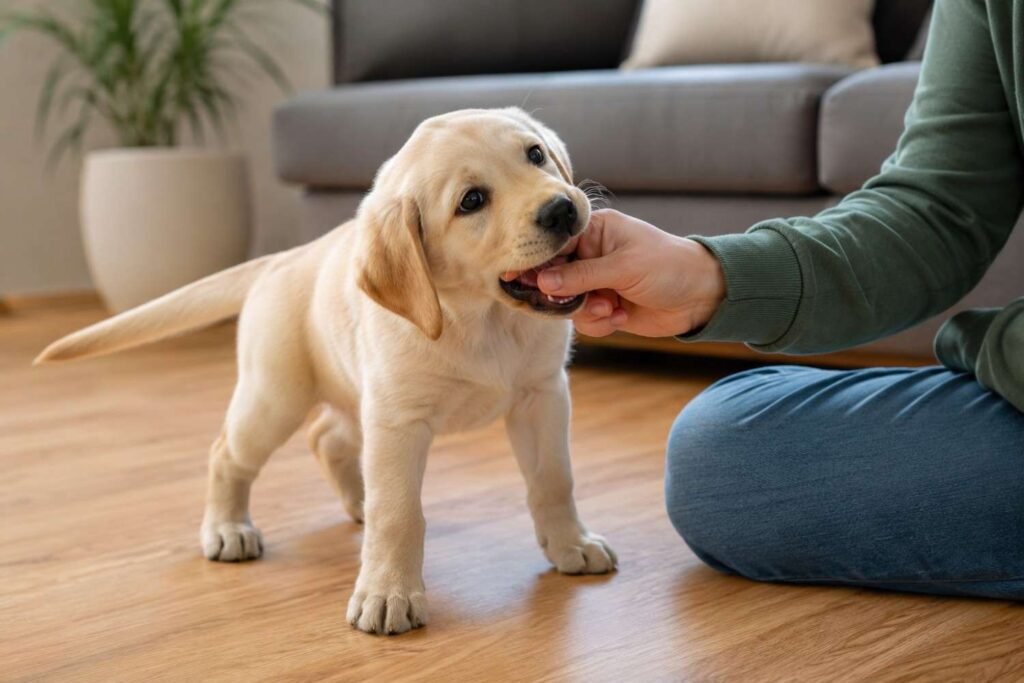
This was the biggest breakthrough for me because I finally had a clear step-by-step response instead of reacting emotionally.
The moment your puppy bites, freeze completely. Do not yank your hands away or pull at your clothing. Fast movement triggers a puppy’s prey instinct and encourages chasing.
Pause for two seconds and give your puppy a chance to release naturally. If they continue, use a calm verbal cue like “Ow” without yelling or sounding emotional.
Next, remove all attention immediately. I would stand up, cross my arms, or turn away completely. If the biting continued, I calmly stepped behind a baby gate or briefly left the room for about 15 seconds.
The key is making rough play boring instead of exciting.
Once the puppy settled down, I returned calmly and redirected the behavior toward an appropriate chew toy or teething toy. Over time, my puppy learned that gentle play kept attention going while rough biting ended the interaction instantly.
This single routine transformed my results with puppy biting training faster than anything else I tried.
Why Bite Inhibition Matters Before Stopping Biting Completely
One mistake many owners make is expecting puppies to stop using their mouths immediately.
Professional trainers often focus on bite inhibition first. This means teaching puppies to control the pressure of their bite before expecting zero mouth contact.
Puppies naturally learn this from littermates. If one puppy bites too hard, the other stops playing. Humans need to recreate this lesson consistently and calmly. A structured Puppy Socialization Checklist can also help reduce fear-based biting by exposing puppies to new people, sounds, environments, and experiences in a safe and positive way.
When I stopped viewing every nip as a disaster and instead treated it like a teaching opportunity, progress became much faster.
How to Stop Puppy Biting Hands and Fingers
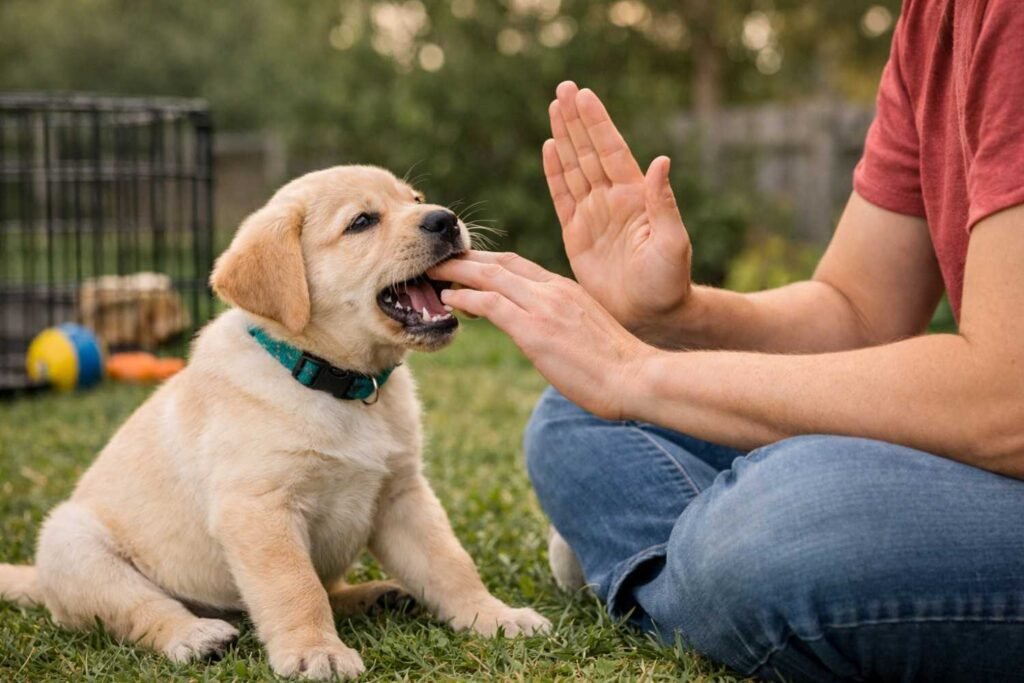
I accidentally made this problem worse in the beginning because I used my hands during play sessions.
Wrestling with bare hands teaches puppies that human skin is part of the game. Once I replaced hand play with structured toy play, the difference became obvious.
Long tug toys worked especially well because they kept my hands farther from the puppy’s mouth. Trainers often recommend toys at least three times the length of the puppy’s body to reduce accidental hand contact.
I also stopped moving my hands quickly during biting moments. Calm stillness reduced chasing behavior dramatically.
How to Stop Puppy Biting Ankles and Clothes
Ankle biting usually exploded during evening zoomies in my house.
Loose clothing, fast movement, and overstimulation created the perfect storm. I learned quickly that running away only encouraged more chasing.
Instead, I slowed my movements, redirected my puppy toward toys before excitement escalated, and avoided loose pajama pants or dangling clothing during heavy teething phases.
Sometimes the best solution was simply rest. Puppies need far more sleep than most owners realize. Young puppies often require 18 to 20 hours of sleep daily. Once I enforced nap schedules consistently, the ankle attacks dropped noticeably.
Proactive Prevention Strategies That Actually Work
Preventing biting is much easier than reacting to it repeatedly.
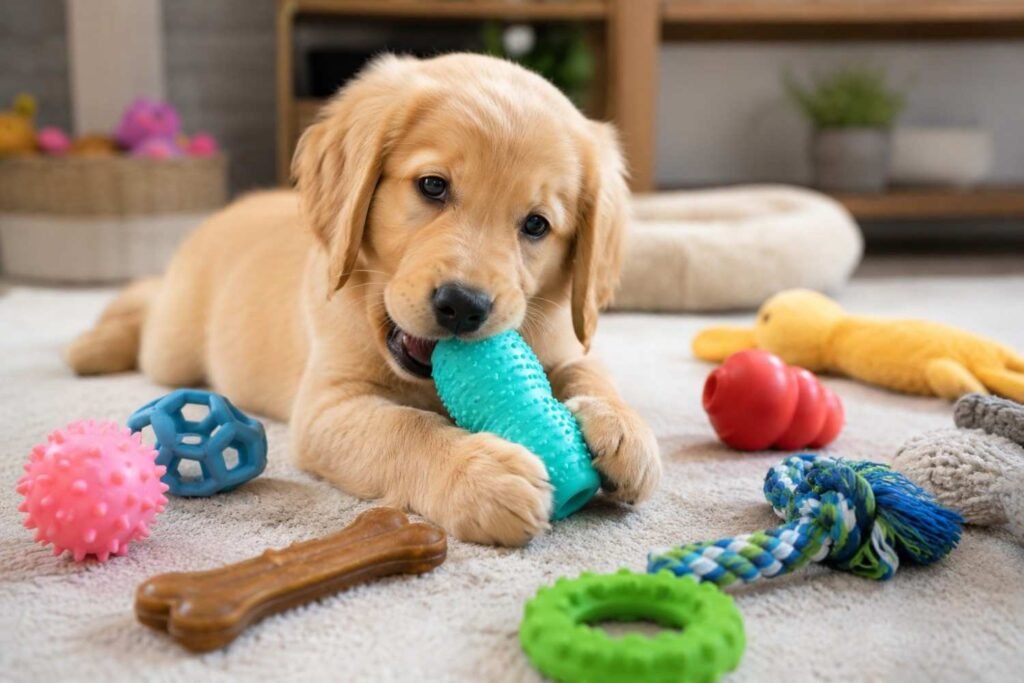
Frozen chew toys became one of my favorite tools because they soothed sore gums while redirecting chewing behavior appropriately. Licking mats and food-stuffed enrichment toys also helped calm overstimulated behavior.
Mental stimulation mattered just as much as physical exercise. Short training sessions throughout the day tired my puppy faster than endless running around the yard.
I also learned to watch for early warning signs. If my puppy became wild, jumpy, or frantic, it usually meant he was overtired rather than energetic.
That realization changed everything about how I approached puppy biting training at home.
Common Mistakes That Make Puppy Biting Worse
Many human reactions accidentally reward biting behavior.
Yelling, pushing, or physically correcting a puppy often increases excitement rather than stopping the behavior. Puppies frequently interpret those reactions as part of the game.
Another mistake is immediately shoving a toy into the puppy’s mouth while they are actively biting you. That can unintentionally reward the behavior sequence.
I learned to pause first, remove attention briefly, and only redirect after calmness returned. Consistency also matters more than intensity. Puppies learn through repeated patterns, not emotional corrections.
Ignoring early warning signs can sometimes lead to more serious issues later, including painful injuries or even a potential dog bite infection if broken skin is not cleaned and treated properly.
Best Chew Toys for Teething Puppies
Not all chew toys worked equally well for my puppy.
Soft rubber teething toys, frozen puppy-safe chews, rope toys, and food-dispensing toys held attention the longest. Texture variety helped prevent boredom while satisfying chewing needs safely.
I avoided giving random household objects because puppies struggle to distinguish between approved chewing items and forbidden items.
The right teething setup can make a massive difference during puppy biting training, especially between 3 and 6 months of age.
How Long Does It Take to Stop Puppy Biting?

This depends on breed, consistency, energy level, and age.
I noticed meaningful improvement within a few weeks, but full progress took several months. Most puppies improve dramatically once teething slows down and routines become consistent.
Patience matters more than perfection.
Puppies are not trying to dominate or manipulate you. They are learning self-control one interaction at a time.
When to Get Professional Help
Some puppies need additional support beyond standard training methods.
If your puppy regularly breaks skin, guards food aggressively, shows stiff body language, or reacts unpredictably, contact a certified positive reinforcement trainer or veterinarian.
Early intervention prevents small issues from becoming larger behavioral problems later.
FAQs About Puppy Biting
1. At what age do puppies usually stop biting?
Most puppies improve significantly between 5 and 7 months once teething ends and training becomes consistent.
2. Why does my puppy bite more at night?
Evening biting often happens because puppies become overtired and overstimulated after a long day.
3. Should I punish my puppy for biting?
Physical punishment often increases fear and excitement. Calm redirection and removing attention work far better long term.
4. Do puppies grow out of biting naturally?
Some improvement happens with age, but training is still necessary to teach proper bite control and impulse management.
5. What breed of puppies bite the most?
Herding breeds and working breeds often nip more because chasing movement is deeply connected to their instincts.
A Calmer Puppy Starts With Consistent Training
Looking back, I honestly underestimated how exhausting the biting phase would feel. There were moments when I thought the nipping would never stop. But once I understood why puppies bite and stayed consistent with training, things slowly began improving week after week.
The biggest lesson I learned is that puppies do not need harsh punishment. They need structure, repetition, sleep, redirection, and clear boundaries. Every calm response teaches your puppy something valuable. Over time, those small daily lessons build real impulse control and better behavior.
If you stay patient, avoid emotional reactions, and follow a consistent routine, this phase will pass. The playful puppy constantly attacking your hands and ankles today can absolutely grow into a calm, well-mannered dog you fully trust around family, guests, and children.